Caring for animals in winter — essential precautions for dairy farms and traditional livestock farming.
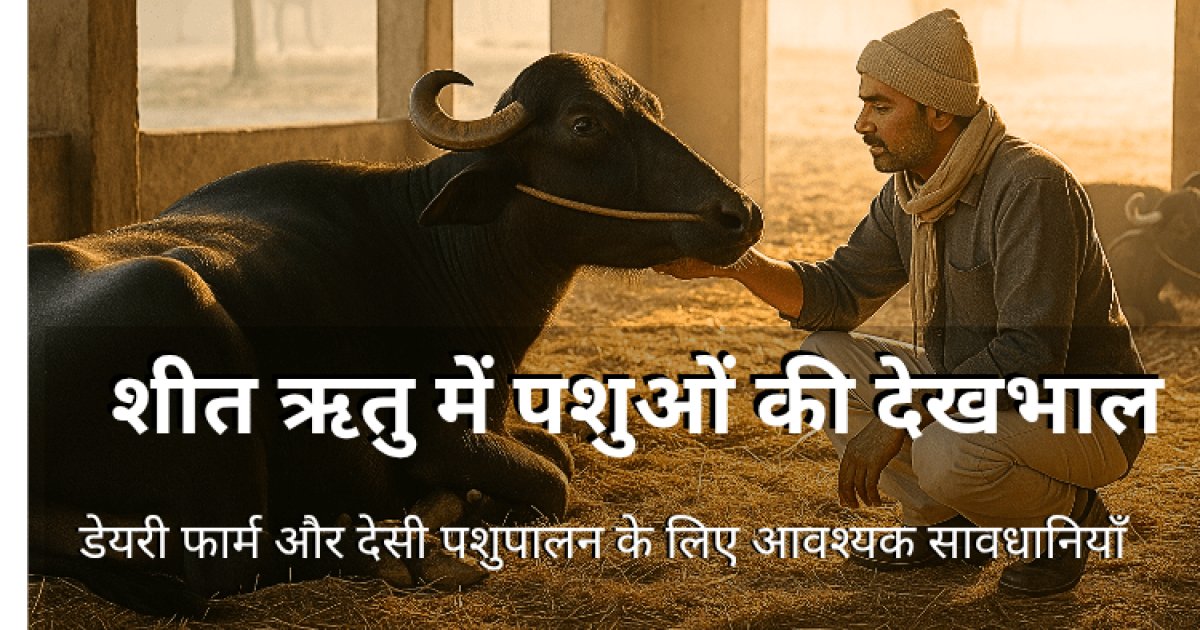

Winter Care for Livestock
In winter, follow these essential measures to protect your livestock, maintain milk production, and ensure their health. Learn easy ways to care for sheds, provide proper nutrition, administer vaccinations, and protect your animals from the cold.
Caring for Animals in Winter — A Practical Guide for Dairy and Indigenous Livestock Farming
Cold weather directly impacts the productivity, health, and reproduction of livestock. Cold winds, fog, and dampness can increase problems such as chills, pneumonia, mastitis, loss of appetite, and decreased milk production. With a little vigilance and proper management, we can keep our animals safe.
1) Keep the animal shelter (shed) warm, dry, and draft-free
Seal cracks in the roof and walls of the shed to prevent cold air from directly reaching the animals. Install a windbreak (tarpaulin or tin/bamboo barrier) on the north/west side. Keep the floor dry; ensure proper drainage of water/urine.
2) Increase bedding
Lay a 10–15 cm thick layer of straw/hay and dry the bedding daily in the sun before laying it back down. Wet bedding is a major cause of mastitis and pneumonia.
3) Provide lukewarm water in sufficient quantities
Animals drink less cold water, leading to decreased milk production. Provide slightly lukewarm water in the morning and evening, and make water available 3–4 times a day. Hang a salt lick in the shed.
4) Provide energy and protein-rich feed
Energy consumption increases in winter, so ensure a balanced diet with energy (maize, barley, fodder), protein (mustard/soybean cake, gram flour), and good quality dry fodder (green fodder with quality straw). For a cow producing an average of 10 liters/day of milk, provide 3–4 kg of feed.
A balanced feed is recommended; increase the amount of green fodder such as berseem/oats. 5) Mineral Mix and Vitamins Provide 30–50 grams of mineral mix and vitamin A, D, E supplements daily in the feed (as advised by a veterinarian). Micronutrient deficiencies in cold weather rapidly reduce milk production. 6) Prevention of Mastitis Clean the udder with lukewarm water before milking, then dry and wipe it with a clean cloth. Protect the udder from cold air, and immediately change wet flooring/bedding. If you notice clotted particles in the milk, redness, or pain, contact a veterinarian immediately. 7) Prevention of Respiratory Diseases and Cold Do not expose the animal to direct cold air; avoid long baths in the biting cold of the morning. If you observe coughing, runny nose, rapid breathing, lethargy, or shivering, do not delay treatment. 8) Vaccination and Deworming Get vaccinations for HS, BQ, FMD, etc., done on time according to the local schedule. Deworming after the rainy season/at the beginning of winter is beneficial—select the medication based on weight and veterinary advice. 9) Pregnant Animals and Calves Keep pregnant animals away from crowded areas during the last 2–3 months of gestation, and prevent them from slipping. Keep the calving area warm and dry. Immediately dry the newborn calf, place it in a warm place, and ensure it receives the first colostrum within one hour. Clean/dip the navel and keep lukewarm water available. 10) Hoof and Skin Care Mud and wet floors increase the risk of hoof diseases; provide regular cleaning and a level, dry area. Standing in the sun for 20–30 minutes is beneficial for Vitamin D and immunity. 11) Working/Elderly Animals Covering lean/elderly animals with a blanket/jute sack at night is helpful. Provide rest and lukewarm water before and after long-distance work. 12) Daily Quick Checklist Is the bedding dry? Is there no direct draft? Was lukewarm and sufficient water provided? Did the animal eat/chew cud in normal quantities? Has the milk yield not decreased suddenly? Is there no cough/fever/pain? —Check these 6 points daily. Caution: The quantity of feed/medicine may vary depending on the local climate, breed, age, and production. Always consult your nearest veterinarian or paraveterinarian before deciding on the medication/vaccination schedule.