Natural ways to increase milk production – A complete guide on feed, management, and home remedies.
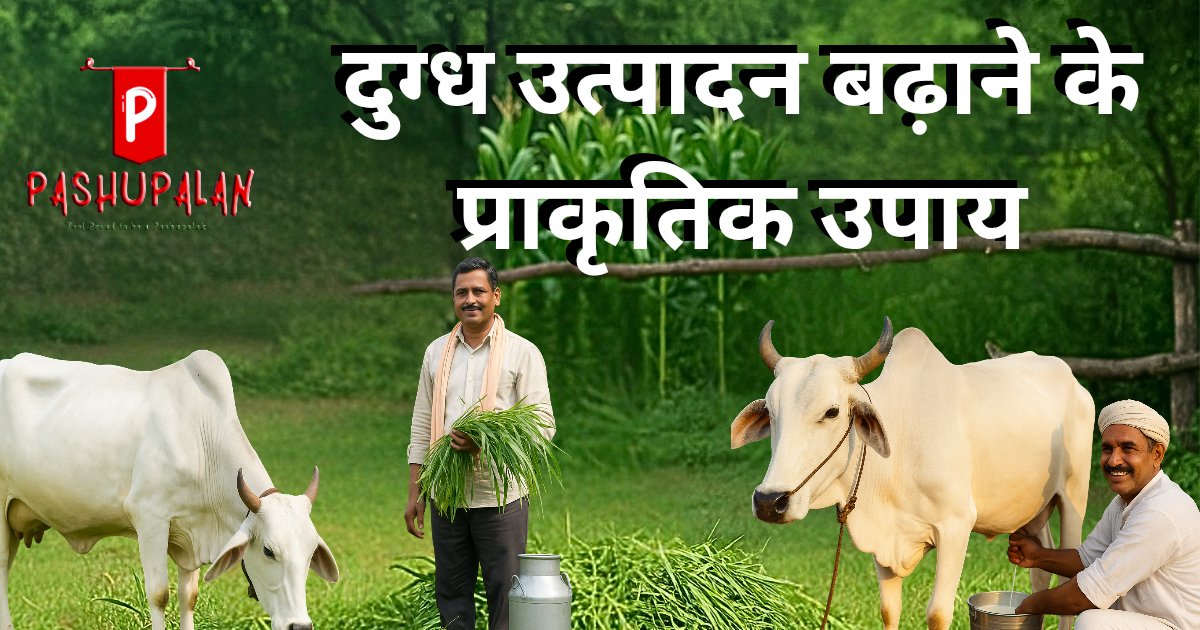

Boost Milk Yield: Natural Methods
Why is milk production low? Learn about natural and inexpensive solutions – proper feed, breed selection, care, medicinal plants, and home remedies that increase milk production without chemical drugs.
India has been known as the "land of milk and curd" for centuries. Having a cow or buffalo in every household has been a symbol of prosperity. However, in modern times, rising costs, dwindling green fodder, and excessive use of chemical drugs have increased the challenges for dairy farmers. Therefore, it's time to re-adopt natural and sustainable methods of milk production.
🐄 1. Major Reasons for Low Milk Production
It is essential for farmers to understand why a cow or buffalo's milk production decreases. Until the cause is known, the solution remains incomplete.
- Unbalanced diet: Insufficient energy, protein, minerals, and vitamins in the animal's diet.
- Improper milking management: Negligence in udder cleaning, milking time, and technique.
- Stress or heat: High temperatures, flies and mosquitoes, or noise can cause stress in the animal.
- Diseases and parasites: Internal/external worms, mastitis (udder inflammation), or digestive disorders.
- Lack of proper nutrition after weaning or calving.
By considering these reasons and improving diet, environment, and care naturally, farmers can increase milk production by 30-40% without the use of drugs or hormones.
🌱 2. Green Fodder – The First Natural Source for Increasing Milk Production
"As is the food, so is the milk." This principle holds true in animal husbandry. The most important factor in increasing milk production is providing the cow or buffalo with nutritious green fodder.
Main types of green fodder:
- Berseem (Lucerne): The king of winter fodder. Protein 18–20%, easy to digest.
- Sorghum-Millet: Useful in summer, rich in fiber and energy.
- Napier Grass (CO-4, CO-5): Green fodder available year-round, production up to 300–400 quintals per acre.
- Subabul (Leucaena): Up to 25% protein. But avoid excessive amounts (due to mimosine content).
- Moringa: The “milk booster” tree. Its leaves increase milk fat.
Correct Quantity of Green Fodder:
Approximately 8–10 kg of green fodder should be given per 100 kg of body weight daily. For lactating cows, 60% of the total diet should be green fodder.
🌾 3. Dry Fodder and Homemade Cheap Mixture
Dry fodder is an essential alternative when green fodder is scarce. However, feeding only dry straw reduces milk production, so use a homemade formula to make it more nutritious.
Straw Improvement (Urea Treatment):
Mix 4 kg of urea and 50 liters of water with 100 kg of dry straw and keep it in a closed pile for 21 days.
This results in 40% more digestible protein in the straw.Homemade Feed Mixture (Low-cost formula):
• Wheat bran – 40%
• Mustard oil cake – 20%
• Ground maize – 30%
• Mineral mixture – 2%
• Jaggery powder – 3%
• Fenugreek powder – 1%
This mixture increases both the quantity and quality of milk.
🍀 4. Medicinal Plants (Herbal Additives) that Increase Milk Production
Traditional Indian veterinary texts mention several plants that naturally increase milk secretion and also maintain udder health.
Main Herbal Plants:
| Plant | Scientific Name | Effect |
|---|---|---|
| Fenugreek | Trigonella foenum-graecum | Milk enhancer, improves digestion |
| Moringa | Moringa oleifera | Source of protein and calcium |
| Giloy | Tinospora cordifolia | Increases immunity |
| Ashwagandha | Withania somnifera | Reduces stress, increases appetite |
| Turmeric | Curcuma longa | Reduces udder inflammation |
| Isabgol/Psyllium | Plantago ovata | Aids in digestion |
Dry these plants, make a powder, and mix 20–30 grams daily with the fodder. This increases milk production by 15–20% and reduces the need for medication.
🐮 5. Breed Selection – Consider both Production and Adaptability
Different breeds of cows and buffaloes are suitable for different regions depending on the climate and soil conditions.
To increase milk production, farmers should choose a breed according to their local climate.Major Breeds of Indigenous Cows:
- Sahiwal – High milk production (8–15 liters/day)
- Gir – Suitable for hot regions, 10–12 liters/day
- Tharparkar – Suitable for arid regions, 6–8 liters/day
- Red Sindhi – Excellent disease resistance
- Rathi – Popular in Rajasthan and Haryana, 8–10 liters/day
In Buffaloes:
- Murrah – High-fat milk (7–10%)
- Mehsana – Suitable for the Gujarat region
- Nagpuri – Suitable for arid regions
🪣 6. Correct Method of Milking
Incorrect milking techniques can damage the udder's blood vessels and reduce milk secretion.
To increase milk production naturally:
- Milk twice a day at fixed times.
- Wash the udder with warm water and neem water.
- Maintain a calm environment during milking.
- Keeping the calf nearby increases milk secretion.
- After milking, gently massage the udder with mustard oil.
This will help...
Simple measures can increase milk production by 10-15%.🔥 7. Reduce Stress – This is also a factor in increasing milk production
Stress in animals (heat, noise, overcrowding) directly reduces milk production.
Measures to reduce stress:
- Ensure the shed temperature does not exceed 25°C in summer.
- Provide shade and water in sunny areas.
- Use neem smoke or lemongrass spray for mosquito and fly control.
- Maintain a calm environment with soft lighting and music at night.
A calm animal gives more milk.
💧 8. Water – 85% of milk!
Approximately 85% of milk is water, so if the animal does not receive sufficient and clean water, milk production is bound to decrease.
- Provide 50-60 liters of water per 100 kg of body weight daily.
- The water should be clean, odorless, and chlorine-free.
- Change the water 3-4 times a day during the summer.
🌿 9. Measures to increase milk production with Panchagavya and traditional tonics
The use of tonics made from Panchagavya (milk, curd, ghee, cow urine, cow dung) is extremely useful in increasing milk production.
Homemade Panchagavya tonic recipe:
• Fresh cow urine – 1 liter
• Cow dung – 500 grams
• Milk – 200 ml
• Curd – 200 ml
• Ghee – 100 ml
Mix all these ingredients in an earthen pot and keep it in the shade for 5 days. From the 5th day, give the animal 50 ml of this mixture mixed with 1 liter of water.
This tonic activates the udder glands and increases natural hormone secretion.
🌾 10. Natural Ways to Increase Milk Fat (%)
- Moringa leaves – up to 500 grams daily.
- Jaggery + Mustard oil (50g + 10ml) mixed with fodder.
- Roasted chickpeas + Flax seeds (50g).
- Gently massage the udder with mustard oil.
- Bathe buffaloes twice a day in a pond.
📋 11. Natural Disease Control – Avoiding Medicines
| Disease | Natural Treatment |
|---|---|
| Bloating | Mustard oil + Ginger juice (20ml) |
| Udder Swelling | Turmeric + Aloe vera gel paste |
| Indigestion | Carom seeds + Fennel decoction |
| Loss of Appetite | Giloy juice 50ml |
| Skin Diseases | Bathing with neem water |
💰 12. Economic Perspective – How to Get More Profit with Less Expense?
Through natural management, farmers can save on the following:- Feed costs reduced by 25–40%.
- The need for medicines and hormone injections is almost zero.
- Consistent milk production due to reduced incidence of udder diseases and bloating.
- Additional benefits from manure and biogas production from cow dung and urine.
Monthly example for one cow:
| Item | Expenses (₹) | Income (₹) |
|---|---|---|
| Fodder | 2,800 | - |
| Supplements and Herbals | 300 | - |
| Milk Sales | - | 14,000 |
| Cow Dung Manure | - | 1,500 |
| Total | 3,100 | 15,500 |
| Net Profit | ₹12,400/month | |
🏡 13. Examples of Successful Livestock Farmers
- Sanjay Chaudhary (Haryana): Earns ₹1.5 lakh/month by selling organic milk from 10 indigenous cows.
- Gopal Gaushala (Rajasthan): Achieved a 30% increase in milk production using a Moringa and Berseem-based fodder model.
- Karnataka: Increased milk fat content by 1% through the regular use of Giloy tonic.
🔚 Conclusion
Natural remedies are not only inexpensive and safe, but also beneficial for both the environment and the consumer.
Remember: “The real key to increasing milk production is – nutritious fodder, a clean environment, and calm animals.”
If farmers care for their animals like family members, remarkable improvements in milk production are possible without any chemical drugs or expenses.
Healthy animals are a farmer's greatest asset.
✍️ Author: Dr. Mukesh Swami (Veterinarian & Editor – Pashupalan.co.in)
👉 हमारा Pashupalan WhatsApp Channel Join करें
पशुपालन से जुड़ी जरूरी जानकारी, blogs, videos और directory updates सीधे WhatsApp पर पाएं।
🔗 Follow on WhatsApp