Animal Husbandry: A Foundation of Service, Coexistence, and Social Welfare
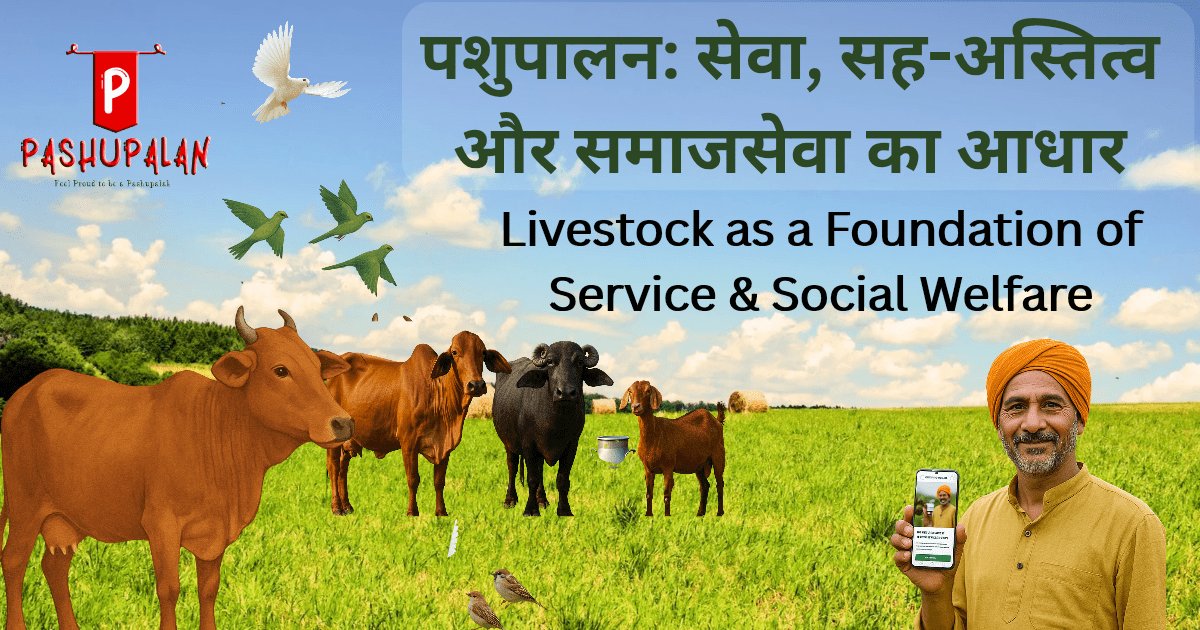
Livestock: Service & Social Welfare
Learn how NGOs and social organizations are revitalizing animal husbandry as a service and a practice of coexistence. Trusts like Shristi Mitraa are promoting compassion-based animal care through projects such as UdaanGhar and Bird Rescue.
Animal Husbandry: A Foundation of Service, Coexistence & Social Welfare | Livestock as a Foundation of Service, Coexistence & Social Welfare
India is known not only for its culture, spirituality, and diversity, but also for its animal husbandry tradition. For centuries, cattle, buffaloes, goats, sheep, camels, and allied species have coexisted with human life. Animals are not just "means of production" for us, but symbols of compassion, kindness, and social responsibility. When this vision is combined with NGOs and conscious animal husbandry, animal husbandry transforms into a service-based ecosystem.
1) Indian Vision: Beyond Economic Gains, Service and Coexistence | Beyond Profits: Service & Coexistence
In the Indian context, animal husbandry isn't limited to milk, ghee, and food products. It's a way of life rooted in service and compassion. In villages, cows and buffaloes are seen as family members; animal service is not just "work," but "dharma." This is why ancient texts honor cow service, animal care, and pastoral life. Even today, this emotional capital binds rural society together.
2) Humane Livestock Care: Compassion-Based Animal Welfare
In modern times, "high-yield" thinking dominates the pursuit of increased production; but humane livestock care reminds us that animals are sentient beings. Proper diet, clean water, comfortable sheds, regular vaccinations, and timely treatment—these are the fundamental pillars of a welfare-first approach. When compassion is incorporated into animal husbandry, vet costs decrease, productivity remains stable, and herd longevity increases.
3) Role of NGOs: From Awareness to Action
NGOs and philanthropic organizations promote animal welfare as a mass movement. They go from village to village, conducting awareness sessions, vaccination drives, deworming camps, infertility clinics, and emergency rescue. The impact of these efforts is visible on two levels:
- Direct improvement in animal health and welfare.
- Increase in income, knowledge, and confidence of animal keepers.
A major contribution of NGOs is community participation. When village-level self-help groups, Mahila Mandals, and youth participate in animal care, the model becomes sustainable.
4) Case Lens: Initiatives like “Shristi Mitraa” | A Living Example
Organizations like Shristi Mitraa combine animal care, bird care, and environmental protection with the motto “Be Humane, Save Universe.”
- UdaanGhar (Bird Rehab & Hospital): A model focused on the treatment, rehabilitation, and recovery of injured/sick birds—where compassion, hygiene, and scientific treatment go hand in hand.
- PankhGhar (Aviary Space): A safe, natural environment for recovered birds—where they undergo flight training and observation.
- Animal Rescue & Treatment Camps: Mobile-based treatment for stray/injured animals in remote areas.
- Save Soil, Save Water campaign: Through organic farming inputs (cow dung manure, cow urine-based bio-pesticides), water conservation, and plantation drives Linking animal husbandry to climate-positive livelihoods.
Such initiatives demonstrate that when veterinary compassion combines with social service, a compassion-centric ecosystem is created, benefiting all – animals, the environment, and humans.
5) The “Livestock–Environment–Human” Triangle | The Triangular Balance
A healthy livestock system is a friend to soil, water, and biodiversity. Manure/compost is a natural fertilizer; cow-based bio-solutions reduce chemical load; goats/sheep contribute to grassland regeneration through controlled grazing.
When dairy/animal farms adopt zero-waste, manure management, and water harvesting practices, the carbon footprint decreases and sustainable animal husbandry becomes possible. Environmentally friendly livestock systems not only provide products but also support soil health, pollinators, and village ecology.
6) Digital Empowerment: Livestock Platforms as Knowledge Bridges
Today, even village youth are learning with smartphones. Platforms like Pashupalan.co.in bring together livestock farmers, veterinarians, feed/product suppliers, trainers, and NGOs. Directories, advisory notes, success stories, local service listings, and community Q&A – all these together act as a knowledge bridge.
An open, bilingual, SEO-optimized knowledge base reduces the urban-rural divide. Skill videos, blog posts, disease alerts, and season-wise checklists improve ground-level decision-making.
7) Women & Youth: Social Inclusion in Animal Husbandry
Inclusive animal husbandry is not possible without the participation of women and youth. When women's SHGs (Self-Help Groups) engage in milk collection, curd/ghee/paneer processing, and making bio-products from cow dung, household income is diversified.
Young people create rural jobs by becoming paravets, AI (artificial insemination) technicians, fodder entrepreneurs, and supply-chain coordinators. Digital literacy + hands-on skilling together contribute to employment, respect, and migration reduction.
8) Health First: Preventive is Profitable
A preventive approach to animal health is the most cost-effective.
Regular vaccination/deworming, mineral mixture, clean water, shade & space, timely heat detection, and mastitis control—all these reduce costs and stabilize output. Seasonal health calendars and bilingual IEC (Information-Education-Communication) materials created by NGOs/clinics increase adoption. Community-based surveillance and early reporting can prevent outbreaks.9) Feed & Fodder: Nutrition is Non-Negotiable
Balanced ration, green fodder planning (berseem, maize, sorghum, napier), crop residue treatment (urea/urease methods), silage making, and mineral supplementation—these are the foundation of productivity. When NGOs demonstrate "how to prepare good fodder at low cost" through demonstration plots and farmer field schools, fodder shortages and feed costs are controlled. This improves both milk yield and reproduction indicators.10) Ethics & Compliance: Responsible Livestock Systems
Ethical sourcing, humane transport, fair pricing, quality testing, and waste management—are hallmarks of responsible systems. In cooperative and FPO (Farmer Producer Organization) models, pricing transparency and input aggregation give farmers negotiating power. When NGOs provide training + facilitation in these processes, the value chain is strengthened, adulteration decreases, and consumer trust increases.11) Disaster & Stray Management: Community-Led Solutions
In disasters like drought/floods/heatwaves, fodder banks, water points, and mobile vet units prove to be lifesavers for animals. NGOs/village committees can work together to create fodder routes, rehydration points, and emergency helplines. For stray/injured animals, community-led reporting, rescue vans, and short-stay shelters operate in coordination with municipal bodies and NGOs. Public awareness + school programs also instill values of compassion in children.12) Income Diversification: Beyond Dairy
Diversified products are essential for increasing income—A2 ghee, paneer, probiotic curd, desi cow dung-based agri-inputs, goat milk soaps, dung logs, vermi-compost, farm visits, and edu-tourism. Such low-capex ideas are suitable for SHGs and youth groups.
For market linkages, bilingual catalogs, WhatsApp Business, local markets, district fairs, and e-commerce pilots are effective. Storytelling (farmer-origin stories) gives products an ethical premium.
13) Policy & Schemes: How to Implement Schemes on the Ground
Government schemes (insurance, breed improvement, fodder development, dairy infrastructure) are only effective when there is field-level handholding. NGOs act as a bridge in information dissemination, documentation assistance, and bank linkages.
Cluster-based applications, group insurance, and common service centers reduce transaction costs. This allows even small livestock farmers to benefit from the schemes.
14) Communication & SEO: Giving Knowledge Reach
Bilingual (Hindi + English) content, clear headings, FAQs, action checklists, and seasonal alerts—all of these increase digital reach. SEO keywords such as “livestock welfare”, “sustainable dairy”, “rural animal health”, “bird rescue”, “NGO animal husbandry”, etc., make blogs/directories discoverable.
Short videos, infographics, and farmer success stories generate high engagement on social media. Community WhatsApp/Telegram channels help with ground feedback and rapid dissemination.
15) Conclusion: Service → Sustainability → Social Prosperity
The future of animal husbandry depends not only on high yield curves but also on humane care, social inclusion, environmental balance, and digital empowerment. When NGOs, veterinarians, farmers, SHGs, and youth come together, the livestock sector becomes a path not just for “profit-only,” but for purpose + prosperity.
Serve Animals, Save Humanity — this is the principle that takes animal husbandry from a business to social service and from compassion to self-reliance. This is the true identity of Indian animal husbandry—where there is service and science; tradition and technology; and above all, the promise of co-existence.