Climate Change and Animal Husbandry: Changing Weather, Growing Threats, and Our Solutions
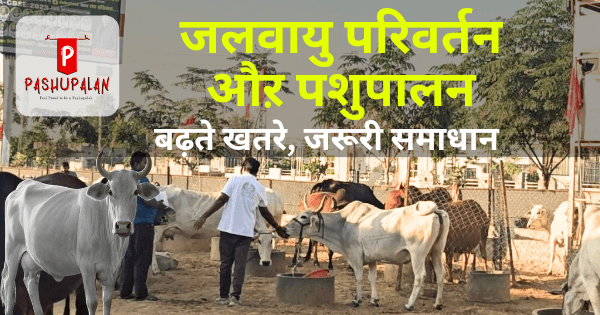

Climate Change: Livestock Challenges
The rate at which the Earth's temperature is rising is having a profound impact not only on crops but also on our livestock.
1. Rising Temperatures and Decline in Milk Production
Heat stress is directly impacting milk production. When the ambient temperature exceeds 30°C, cows and buffaloes eat less, drink more water, and their bodies begin to expend energy on maintaining coolness rather than producing milk.
Research has shown that during periods of consistently high temperatures, milk yield decreases by 10-25%. Exotic breeds like Holstein-Friesian or Jersey are particularly susceptible to the Indian heat. In contrast, indigenous breeds (Sahiwal, Gir, Tharparkar, Rathi, etc.) have a relatively higher adaptive capacity.
2. Water Scarcity and Feed Crisis
The most direct impact of climate change is on water resources. Reduced rainfall, droughts, and declining groundwater levels affect both drinking water for livestock and irrigation for fodder crops.
In many states of India, the availability of green fodder has decreased by 30-35%. This forces livestock farmers to rely on dry fodder or expensive concentrates, increasing production costs and reducing profits.
3. Increase in Diseases and Parasitic Infections
Warm and humid weather is conducive to the breeding of parasites. Organisms like ticks, mosquitoes, flies, and fungi spread rapidly, increasing the risk of diseases such as FMD, Anthrax, Black Quarter, Bluetongue, and Tick Fever.
Often, the geographical distribution of these diseases changes — areas that were previously safe are now experiencing outbreaks. Therefore, animal husbandry departments are now having to redefine disease mapping and vaccination schedules.
4. The Impact of Climate on Reproduction
High temperatures increase irregularities in the heat cycle of female animals and reduce sperm quality in male animals.
Experts believe that if the temperature remains above 35°C, the chances of conception can decrease by 20-30%. This is why a decline in artificial insemination (AI) success rates is being observed in many states.
5. Threat to Pastures and Biodiversity
Where there were once green fields for grazing, only dry, barren patches remain. The shrinking of pastures has not only reduced the nutrition available to livestock but is also reducing the diversity of birds, insects, and soil microorganisms – which were essential for maintaining soil fertility.
6. Steps Towards Climate-Smart Livestock Farming
It is now time for livestock farmers, scientists, and policymakers to work together towards a Climate Smart Livestock System. This means adopting measures that mitigate climate impacts and secure the income of livestock farmers.
- Prioritizing Local Breeds: Indigenous animals are heat-tolerant, thrive on less fodder, and are disease-resistant.
- Water-Saving Technologies: Reusing biogas slurry, rainwater harvesting, and drip irrigation for fodder crops.
- Shaded Shelters: Using ventilation, fogging, and green shade nets in animal sheds.
- Feed Banks and Silo Pits: Preserve fodder during the rainy season so that animals receive regular feed during droughts.
- Insurance and Digital Tracking: Avail livestock insurance schemes (from NABARD or state schemes) and identify animals with ear tags.
7. Government and Community Initiatives
The Government of India's National Livestock Mission (NLM), Gokul Mission, and the "Fodder Development Programs" of several states are working in this direction.
At the community level, activities such as fodder banks, cool shed development, and local breed conservation by NGOs and farmer groups are proving to be effective steps towards climate resilience.
8. The Way Forward: A Confluence of Science and Compassion
Animal husbandry is no longer just a traditional livelihood; it has become a sector where a balance of science, compassion, and environmental protection is essential.
If we begin to view animal husbandry from a climate-sensitive perspective, in the coming years it can become the strongest foundation not only for our economy but also for environmental conservation.
Conclusion
Climate change is not a distant threat – it has already arrived in every cowshed, every dairy farm, and the life of every livestock farmer. The biggest question for us now is how to accept it and transform it into an opportunity for improvement. Local knowledge, scientific techniques, and collective efforts – these are the three pillars that can safeguard animal husbandry from the challenges ahead.
Author: Dr. Mukesh Swami
(Senior Veterinarian & Environmental Activist, Shristi Mitraa & Pashupalan.co.in)