How to Create a Structured Farm Profile?
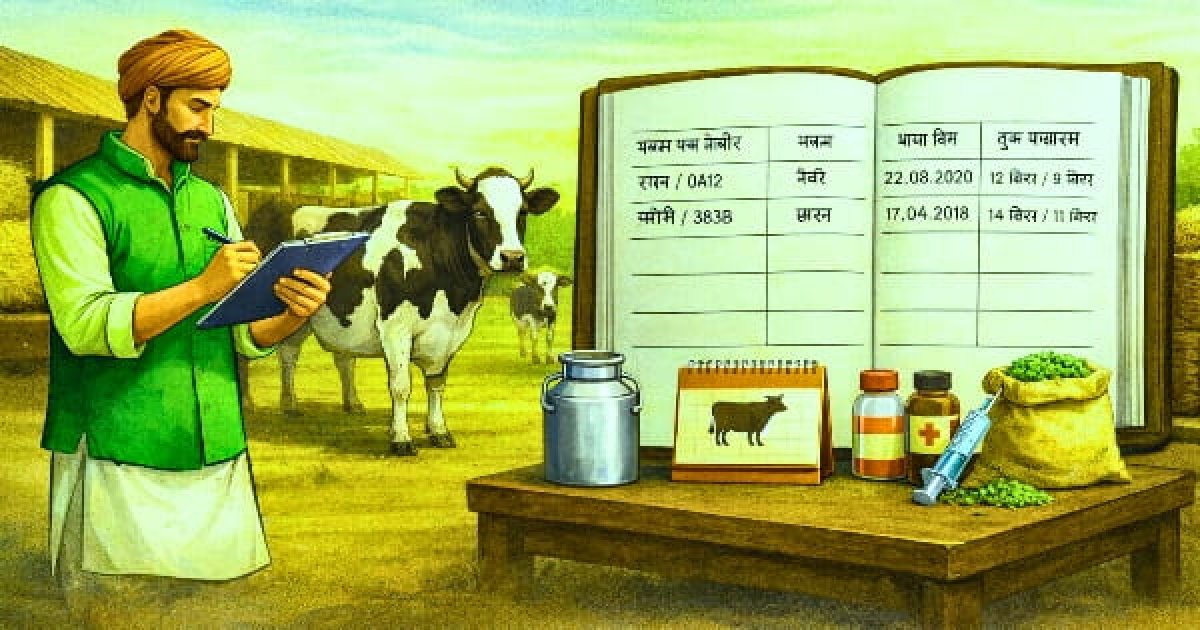

Structured Farm Profile for Dairy Farming – Proper Record Keeping System
Learn how to create a Structured Farm Profile for dairy animals. Understand proper record keeping of milk, breeding, health and feeding for profitable livestock
How to create a structured farm profile? This is the most important question for every farmer who wants safe, sustainable, and profitable production from their livestock in the long term. Most problems in animal husbandry arise not from a lack of medicine, but from a lack of records and understanding.
Today, most dairy farms operate based on memory. Memory is sometimes accurate, sometimes unreliable. But a record written on paper never deceives. This record eventually becomes a structured farm profile.
What is a Structured Farm Profile?
A structured farm profile means — a complete, organized, and continuously updated life record of every cow or buffalo. It includes every piece of information in chronological order, from the animal's birth or purchase to milk production, breeding, diet, illness, treatment, and outcomes.
It not only tells you what happened, but also why it happened and what should be done next.
Why is a Structured Farm Profile Important?
When a farmer is asked —
- When did milk production start to decrease?
- When was the last heat cycle?
- Which medicine was given and when?
the most common answer is — “I don't remember, sir.”
This "I don't remember" gradually leads to repeat breeders, decreased milk production, frequent illnesses, and losses.
A structured farm profile eliminates this "I don't remember."
Main Benefits of a Structured Farm Profile
- Eliminates guesswork in treatment
- Addresses the root cause of diseases
- Stabilizes milk production
- Improves reproductive efficiency
- Reduces expenditure on medicines
- Ensures consistent profit from each cow
Registers Required to Create a Structured Farm Profile
A good dairy farm operates with at least the following registers.
1️⃣ Individual Animal Profile Register
This is the most important register. Each cow or buffalo should have a separate page.
- Animal's name or tag number
- Breed (Indigenous, HF, Cross)
- Date of birth or estimated age
- Body condition
- Age at first calving
- Number of calvings to date
- Date of last calving
This profile stays with the animal throughout its life.
2️⃣ Milk Production Register
Milk production is not just about quantity; the milk pattern tells the story of the animal's health and management.
- Daily milk yield (morning and evening)
- Peak milk yield
- Lactation period
- Date of gradual decline
If milk production is gradually declining, it provides a warning before the onset of disease.
3️⃣ Heat and Breeding Register
This register is the biggest solution to the problem of repeat breeders.
- Date of heat
- Intensity of heat
- Date of artificial insemination or natural service
- Name of the semen used
- Date of pregnancy confirmation
Insemination at the wrong time often occurs due to a lack of proper records.
4️⃣ Health and Treatment Register
- Date of illness
- Main symptoms
- Treatment given
- Dosage and duration of medication
- Recovery or complications
If the same illness is recurring, understand that the problem is not with the treatment, but with the management.
5️⃣ Feeding and Mineral Register
Most reproductive problems are linked to mineral imbalances.
- Green fodder
- Dry fodder
- Concentrate quantity
- Mineral mixture
- Salt and other supplements
What happens without a Structured Farm Profile?
When there are no records, the problem seems sudden.
A farmer says — “The cow suddenly started giving less milk.” But looking at the records reveals that the milk yield had been gradually decreasing for the past 40–50 days.
The problem didn't appear suddenly, it simply wasn't identified.
Field Experience — Improvement through Records
On one farm, there were continuous conception failures. The medication was changed every time, but without success.
Creating records clearly showed —
- Insemination at the wrong time of heat
- Irregular mineral mixture supplementation
- Neglecting previous illnesses
Based solely on improvements guided by the records, in 90 days, 70 percent of the animals became pregnant — without any expensive medication.
Common Mistakes when creating a Structured Farm Profile
❌ Incomplete Records
Only writing down the illness, but not the outcome.
❌ Irregular Entries
Writing sometimes, and skipping other times.
❌ Treating all animals the same
Every cow is different, and its needs are also different.
❌ Not making decisions based on records
Even after creating records, working based on assumptions is the biggest mistake.
How to read records from a veterinary perspective?
The veterinarian reads the records by connecting the dots —
- Milk yield decline and treatment
- Heat cycles and feeding
- Disease and weather
A structured farm profile teaches the farmer the same approach — analysis before treatment.
Manual Register vs. Mobile App
When is a manual register better?
- When the number of animals is small
- In rural areas
- To get started
When is a mobile app useful?
- If you have a large farm
- If you want to learn data analysis
- If you have access to technology
First paper, then digital — that's the right order.
Structured Farm Profile and Future Planning
- Which cows to keep
- Which to cull
- Which breed to focus on
- How to reduce costs
All these decisions come from the records.
Conclusion
The cheapest and most powerful medicine for animal husbandry is — accurate records.
A farmer who adopts a structured farm profile doesn't spend less, but spends wisely.
In the next blog, we will discuss —
- How to do mineral mapping?
- 90-day repeat breeder improvement model
- Village-level practical dairy system
— Dr. Mukesh Swami
Voluntarily retired Senior Veterinary Officer
(RVC Number 2139)